Yoro Art Picnic "Reality Arts"
2018.11.3
Yoro Tenmei Hantenchi
(Site of Reversible Destiny-Yoro Park)

This AR project was created in 2018 as part of the Yoro Art Picnic. At the Yoro Tenmei Hantenchi (Site of Reversible Destiny-Yoro Park) in Gifu Prefecture, an appreciation tool was developed that overlays Shusaku Arakawa + Madeline Gins' concepts and unrealized plans onto the real world via smartphone. Iku Harada participated in this project, handling the 3D modeling. It presented a new perceptual experience that traverses between virtual and reality.
Yoro Destiny Reversal AR: The World of Iku Harada x Shusaku Arakawa + Madeline Gins
"Yoro Art Picnic" November 3rd and 4th, 2018 @ Yoro Park, Gifu
Written by: Yasuko Imura (Lecturer in Art Studies, Institute of Advanced Media Arts and Sciences (IAMAS))
"Yoro Tenmei Hanten AR" is an appreciation tool for use with Shusaku Arakawa + Madeline Gins' "Yoro Tenmei Hantenchi" (1996) [Figure 1]. The aim is to gain a deeper understanding of the work and make new discoveries by using AR (augmented reality) to overlay the artists' concepts, including plans that were never realized, which were left as CG and drawings, onto the real space. For this project, an application was created that shows Arakawa + Gins' concept by overlaying 3DCG layers named 1) Model, 2) Sign, and 3) Planting onto the elliptical, bowl-shaped space of "Yoro Tenmei Hantenchi," which has a major axis of 130m and a minor axis of 100m. The first opportunity to unveil this application was at the "Yoro Art Picnic."

[Figure 1] Children viewing art using viewing tools
In this application, Masayuki Akamatsu and Tomoki Kobayashi developed the AR system, while Iku Harada handled the 3D modeling. Yasuko Imura and Shigeru Matsui analyzed Arakawa + Gins' concept and are conducting joint research. Reinterpretation and recreation are necessary to create 3DCG models from the remaining materials, but Harada's world of work may be providing clues to boldly realizing Arakawa + Gins' concept.
Harada creates virtual worlds using 3DCG in his work, and then paints landscapes as seen from a specific point within those worlds. In his solo exhibition at Art Front Gallery in 2015, the relationship between the two worlds was reversed, and the real gallery space was recreated within the virtual space. In his solo exhibition "NEW DIMENTIONS" this July, he made full use of the optical illusion effect of one-point perspective to create a new space within the gallery space. I was surprised that while Harada's works possess the unique texture and charm of original paintings, this new installation also has an interactivity that prompts viewers to find their own position to view the work. Furthermore, the perspective of one-point perspective is also compatible with photography. Through the spatial perception that can only be obtained by experiencing it on the spot and the diffused images through the camera, I realized the appeal of this work as a visual device [Figure 2].

[Figure 2] Harada Iku Solo Exhibition "NEW DIMENTIONS", Art Front Gallery
On the other hand, in "Yoro Tenmei Hantenchi," Arakawa + Gins' worldview is entrusted not only to physical sensations but also to the "use" of Yoro Tenmei Hantenchi and the imagination born from the names of the pavilions and paths. For this reason, this time we decided to show 1) a "model" as a motif of inversion, 2) "signs" that display the names of the pavilions, and 3) "planting" which is a planting plan that imagines a constantly changing garden. These elements are symbolic in conveying the concept of the work, and at the same time, they are appropriate subjects for producing different expressive effects such as 3D modeling, text, and animation.
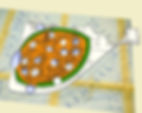
[Figure 3] 3D model of "Yoro Tenmei Hantenchi" based on the drawings
1) "Model": Inverted motif
Based on photographs and completed drawings, a 3D model was created [Figure 3], and an inverted mirror image of the Yoro Tenmei Hantenchi (Site of Reversible Destiny) was displayed on top of the actual structure [Figure 4]. The idea of inversion first appeared in Arakawa + Gins' unfinished project for a bridge in Epinal, France, titled "The process in Question/Bridge of Reversible Destiny" (1973-89). This project consisted of spaces that could be inverted vertically and horizontally, spaces that could be closed off, and spaces onto which perceptions could be projected. Interpreting their concept from their past works, they displayed an inverted mirror image, which cannot be realized in reality, as a model. Viewers can drag the model to move it up and down.
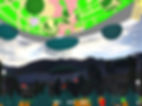
[Figure 4] An inverted mirror image, which is not possible in reality, is displayed on the actual "Yoro Tenmei Hantenchi" (Yoro Reversible Destiny Site).
2) "Sign": Name of the pavilion
The Yoro Reversible Destiny Site has 143 paths and 9 pavilions in 10 zones, each with its own name. This time, we've shown the names of the pavilions [Figure 5]. The pavilions incorporate worldviews that also appear in their other works, such as Cleaving Hall and Destiny House/Landing Site Depot. The words serve as clues to allow viewers to imagine a world view different from their perceptual experience.

[Figure 5] Display of Pavilion Names

[Figure 6] CG for "The Land of Reversible Destiny" 1992
© 2019 Estate of Madeline Gins. Reproduced with permission of the Estate of Madeline Gins.

[Figure 7] The arrangement of plants projected onto the real world as seen through an appreciation tool.
The trees are planned to be placed at different heights according to the slope, and it is expected that the relationship between humans and plants will change as the viewing position changes. Although the current vegetation differs from the plan, viewers can drag the plants up and down to change their appearance and thus alter the relationship between humans and plants in various ways [Figure 7].

[Figure 8] Yoro Park Overall Plan © 2019
Estate of Madeline Gins. Reproduced with permission of the Estate of Madeline Gins.
More than 20 years have passed since the completion of "Yoro Tenmei Hantenchi," and now reality and information are treated equally, which is becoming a natural feeling. In other words, it could be said that the biggest change in these 20 years is the media environment that surrounds us. At "Yoro Art Picnic," visitors were allowed to photograph the landscape they synthesized on site and post it on Twitter (@reality_arts). It is also known that Arakawa and Gins had conceived of the "Yoro Park Overall Plan" prior to "Yoro Tenmei Hantenchi" (1996). There were originally 16 pavilions planned, and only three of them have been realized so far [Figure 8], but it reveals a grand concept to change people's everyday consciousness by having them wander around multiple pavilions with poetic names. In the future, they aim to present the unrealized pavilions using augmented reality.
Reference: Project introduction video
Yoro Tenmei Hantenchi © 1997 Estate of Madeline Gins. Reproduced with permission of the Estate of Madeline Gins.
====================
Yoro Destiny Reversal AR
Yoro Reversible Destiny AR
This AR (augmented reality) app for smartphones was created as part of the Yoro Art Picnic (2018) program. By holding a mobile device over the elliptical field of Yoro Tenmei Hantenchi, visitors can see the images and words that Shusaku Arakawa and Madeline Gins originally envisioned when they created the work superimposed. Arakawa and Gins prepared several features, hoping that visitors would enjoy the experience by re-imagining their senses rather than fearing losing their balance.
More than 20 years have passed since the completion of the Yoro Reversible Destiny Site, and reality and information are now treated equally, a natural and ingrained concept. Through AR (Augmented Reality) technology, we will explore new ways to use the Yoro Reversible Destiny Site by moving between reality and information.
Produced by: Masayuki Akamatsu, Tomoki Kobayashi, Yasuko Imura, Shigeru Matsui, Iku Harada
In cooperation with: Shusaku Arakawa + Madeline Gins Tokyo Office, Yoro Park Office, Gifu Prefecture, and the Institute of Advanced Media Arts and Sciences (IAMAS)
https://artfrontgallery.com/project/Other_Projects/ar.html
====================